In order to fully understand communication, one must know the basics of communication. What is the communication model? A text book used in my public speaking course called Business Talk: Sending, Presenting, and Receiving Messages in a Professional Setting by J. Kanan Sawyer states that the simplest communication model was invented by Aristotle, and it involves three parts; a sender, a message, and a receiver (3). The sender is the beginning of the communication model because this is where the message originates. The sender has information in which he or she wants to share an idea (message) another individual or audience. The sender thinks of a way to put the information into terms that allows the receiver to understand; this can be done through writing, speaking or signing. The message is the idea that is trying to be conveyed from the sender. The message is a key component in the communication process. Lastly, the listener is the person receiving the message from the speaker. The listener is the individual or group who the speaker is intending to get the message across to (4).
Going beyond the basic communication model which includes the sender, message and receiver, there is another way to understand a message. Located in the BTEC article, “Communication in Health and Social Care,” is a diagram with two people conversing. It contains the basic parts of the communication model (sender, message, and receiver) but it also contains occurs in detail when a message is relayed (8). First the message or idea that emerges is when an individual wants to communicate with another individual or group. Next the message is coded in the senders head meaning that the individual prepares the message in a way to deliver the message to the intended audience. Then the message is sent. Fourth, the message is received by the receiver and the decoding process begins. Decoded means that the receiver interprets what he or she is told or has read and breaks down the message in ways that the message can be understood. Finally the communication process is complete (8).
Even though this many seem like a simple process, it is very complicated. Every day people misinterpret messages because of the way the message is worded or how the sender presents the information. Knowing how to properly formulate a message to the intended audience is key. Have you ever read something and became angry because you misinterpreted the message? Or has someone ever told you something but by the way they came off caused you to think the opposite? Communication is so important because people need to know how to clearly relay messages to get the correct point across in a situation. Communication classes help individuals strive for communication excellence. Therefore communication classes need to be implemented into health science majors because these health care professionals interact with many people all day long. The video below demonstrates ways on how communication plays a role in the workplace and what types of communication can be used throughout the day.
There are many different types of communication that people use each and every day. To start off there are two broad types of communication; formal and informal (5). Formal communication is the use of the conventional language. Conventional language means correct grammar when speaking, writing and addressing people. Informal language is the type of language that is more casual language. Informal language is mainly used in texting, talking to family and friends and every day conversations. People sometimes are so caught up in society that there is a short cut for everything (5). In the health care profession, the way you talk to patients, the way you relay information to the patients and the way react to your patients are key components. Other skills that are important in communication are aggression, assertiveness, and time. One must know how to correctly use aggression when communicating because it is a factor that is based on one’s mind. Assertiveness is how one acts toward someone else. To be assertive, one must be calm and firm when delivering a message without coming off too aggressive. Lastly, timing is a huge factor because one must know when and where to tell someone information. Some information takes longer to process than others. For example, imagine getting the news that you or someone you know has a terminal illness. The person relaying the information cannot lay all the information out at once because the person decoding this information will need time to process everything. Knowing how to properly use these skills will make all the difference in communication.
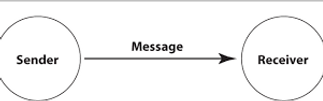
A picture of a Communication Model.

A visual of the communication cycle.